If the words “we need to talk about puberty” make you suddenly want to reorganize the pantry, join the club.
Moms want to handle puberty conversations well, but also don’t want to say the wrong thing, say too much, or turn it into A Big Moment that no one asked for. You might be wondering when to start, what to say, or how much information your daughter actually needs right now.
You might be wondering:
- When is the right time to start?
- How much information is too much?
- What if I make it awkward and she shuts down?
Here’s the reassuring truth most moms don’t hear enough:
Talking to your daughter about puberty doesn’t require perfect timing, expert wording, or one big sit-down talk.
It requires calm, honesty, and permission to keep the conversation open over time.
This guide will help you do exactly that — without awkward speeches, pressure, or cringe.
When Should You Start Talking About Puberty?
Short answer: earlier than you think, but simpler than you’d expect.
Most girls begin puberty between ages 8 and 13, and the earliest signs often show up quietly:
- Body odor
- Breast development
- Growth spurts
- Emotional changes
If you’re noticing any of these, it doesn’t mean it’s time for “the talk.”
It means it’s time to start planting small, calm seeds, not delivering a lecture.
Many moms hesitate here because they worry about:
- “Putting ideas in her head”
- Starting too soon
- Saying more than their daughter is ready to hear
In reality, starting early—with simple language—often prevents fear later.
Why the “Big Puberty Talk” Usually Backfires
Movies make it seem like puberty should be handled with one serious sit-down conversation.
In real life, that often leads to:
- Awkward silence
- Nervous giggling
- Shutting down
- A topic change five seconds in
Girls process information better when it comes in small, manageable pieces over time. Short, casual conversations feel safer, and they keep the door open instead of slamming it shut.
If you’d like a calm way to start without overthinking it, I created a free, 15-minute starter guide that walks you through what to say (and what not to say) for that very first conversation. No speeches required.
If you not sure how to start the conversation without making it weird, download The First Talk Made Simple, a free practical guide, that shows you exactly how to begin the conversation calmly, confidently and without pressure. And have your first conversation done in 15 minutes.


How to Start the Conversation (Without Making It Weird)
You don’t need a script.
You need permission-based language.
Simple openers work best:
- “You might notice some changes in your body as you grow.”
- “A lot of girls your age start noticing new things happening.”
- “If you ever have questions about your body, I’m here.”
That’s it.
You’re opening the door, not forcing her to walk through it.
Many moms worry they’ll freeze in the moment or say the “wrong” thing. The truth? Tone matters more than wording. Calm, neutral language does most of the work for you.
What Girls Actually Need to Know First
You don’t need to explain everything about puberty right away.
Early conversations should focus on reassurance, not details.
Bodies Change at Different Times
There’s no “right” age. Friends may develop earlier or later, and none of that means something is wrong.
Puberty Affects Feelings Too
Mood swings, big emotions, and sensitivity are normal. This doesn’t mean she’s being dramatic. It means her brain and body are adjusting.
Questions Are Always Welcome
Some girls ask everything. Others ask nothing. Both are normal. What matters is knowing the door is open.
What to Avoid Saying (Even With Good Intentions)
Try to avoid:
- “You’re too young for this.”
- “It’s not a big deal.”
- “Everyone goes through it, so don’t worry.”
- Teasing or joking about body changes
This doesn’t mean she’s being dramatic. Aim for calm, neutral responses that let her know she’s safe to ask—now or later.
Let Resources Do Some of the Work (Without Replacing You)
Many girls prefer learning privately at first and that’s not a reflection of your relationship.
Books and guides can:
- Reduce embarrassment
- Explain changes clearly and accurately
- Let girls control how much they read
- Help them know what questions to ask
This doesn’t replace you.
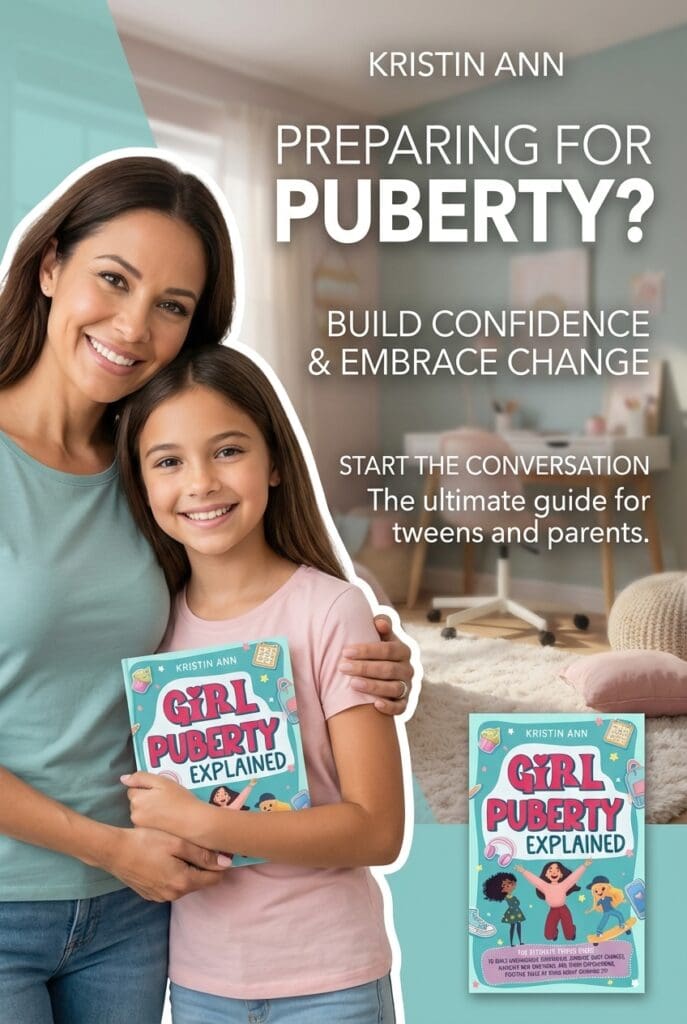
It supports you, especially when you want information to be correct, calm, and not emotionally charged.If you’re looking for a comprehensive, reassuring resource that many families use together (or side-by-side), Girl Puberty Explained was written to fill the gap between “too little information” and “way too much, too soon.”

How to Keep the Conversation Going Over Time
You don’t need to schedule puberty talks.
Natural moments include:
- Buying deodorant or bras
- Shopping for clothes
- Watching a show together, like Inside Out 2
- Emotional days that feel bigger than usual
Short check-ins beat long lectures. Every time.
If Your Daughter Doesn’t Want to Talk (Yet)
That’s normal.
If she shrugs or changes the subject:
- Stay calm
- Don’t push
- Let her know you’re available
Silence doesn’t mean she isn’t listening. Often, it means she’s processing and remembering that you’re a safe place.
Free Puberty Conversation Guide
If starting these conversations feels tricky, you don’t have to wing it. The goal isn’t to say everything. It’s to say enough so your daughter knows she can come back to you. Download The First Talk Made Simple, a free, 15-minute first guide designed to help you get that first conversation right.
Books Mentioned & Other Recommendations
- Girl Puberty Explained — The ultimate tween guide to build unshakeable confidence, embrace body changes, navigate new emotions, and spark empowering, positive talks at home about growing up!
- Girl Body Confidence — Essential tools to grow up strong, build bonfidence, inspire easier conversations with loved ones, nurture a positive body image, empower resilience through buberty & beyond.
- Can’t decide between the two? Get: All About Growing Up for Girls 2 in 1 Collection which has both books in one! Practical puberty & confidence guides to manage emotions, build real friendships, love body changes & grow from awkward to awesome.