If you’ve ever Googled:
“Is my daughter starting puberty too early?”
or
“What age do girls start puberty?”
…this blog is for you!
Because here’s the truth most moms don’t hear enough:
👉 Puberty in girls doesn’t follow a perfect timeline.
Some girls start puberty at age 8.
Others don’t show signs until 11 or 12.
And both are completely normal.
This guide breaks down the girl puberty timeline (ages 8-13) so you know:
- what changes to expect
- what’s considered normal
- and how to support your daughter without overthinking every stage
First: What Is the Normal Age for Puberty in Girls?
Most girls begin puberty between ages 8-13, with an emphasis on the word “most.”
But here’s what matters more than the ages is could begin:
👉 The order and pace vary more than the age itself.
Two girls the same age can be in totally different stages of puberty and both be healthy.
Ages 8–9: Early Signs of Puberty in Girls (That Surprise Us)
These ages are often when moms start searching for things like:
“Why does my 8 year old have body odor?”
Here are some common early puberty signs you may begin to see at this age:
- Breast budding (small lumps under nipples)
- Body odor and sweating
- Emotional sensitivity
- Early growth spurts
👉 These are often the first signs of puberty in girls
What this stage really means:
It’s not “happening fast” but, starting quietly.
What moms can do:
- Introduce deodorant and hygiene casually
- Avoid making a big announcement about changes
- Keep things light and normal
Ages 9–10: Puberty Becomes More Noticeable
This is when puberty becomes harder to ignore.
Common changes at this phase:
- Continued breast development
- Growth spurts (pants suddenly too short)
- Body hair starting
- Mood swings
- Increased self-awareness
👉 This is also when girls start quietly comparing themselves to others.
What moms can do:
- Normalize differences: “Everyone grows at their own pace”
- Help her feel prepared (discuss bras, hygiene basics)
- Stay approachable without forcing conversations
Ages 10–11: Body Awareness + Emotional Changes
At this stage, girls become more aware of their bodies and how others might see them.
Common puberty changes:
- Breast growth continues
- Pubic and underarm hair
- Vaginal discharge (a normal sign puberty is progressing)
- Mood swings and emotional ups and downs
- Desire for privacy
👉 This is often when moms search at this stage: “Is discharge normal before a period?” (Yes, it is.)
What moms can do:
- Start light, natural conversations about puberty
- Prepare for periods before they happen
- Respect privacy while staying connected
Ages 11–12: Puberty Is in Full Swing
This stage often includes the biggest visible changes.
You may notice:
- Ongoing growth spurts
- A true need for a bra, not just discussions
- Acne or skin changes
- Bigger emotional reactions
- Increased independence
- First period (for some girls)
👉 Important: Most girls get their period after other puberty changes begin, not at the start.
What moms can do:
- Stay calm during emotional moments (this matters more than you think)
- Avoid overreacting to mood swings
- Make sure she knows what to expect with her period
Ages 12–13: Puberty Milestones (At Her Own Pace)
By this age, many girls:
- Are well into puberty
- May have started their period
- Are still adjusting emotionally
- Often have irregular cycles
👉 Late bloomers are still completely normal at this stage.
When Do Girls Get Their First Period?
Most girls start their period:
- Between ages 9–14
- About 1–2 years after breast development begins
Signs a period may be coming:
- Vaginal discharge
- Mild cramping
- Emotional changes
- Fatigue
👉 Period timing is one of the biggest Google searches for moms and one of the least predictable parts of puberty.
Emotional Changes During Puberty (What Moms Need to Know)
This is the part that feels the hardest.
Mood swings during puberty:
- Can be intense
- Can change quickly
- Can feel out of proportion
But here’s what’s actually happening:
👉 Her brain is still developing while hormones are increasing
She feels things before she can regulate them.
Translation:
She’s not being dramatic. She’s learning how to handle a changing brain and body.
What’s Normal in Puberty (Even If It Feels Early or Late)
Let’s simplify this:
All of this is normal:
- Early puberty (age 8–9)
- Late puberty (12–13 and still developing)
- Irregular periods
- Uneven growth
- Emotional ups and downs
👉 Puberty is not a straight line and it’s not something you can “get ahead of” perfectly.
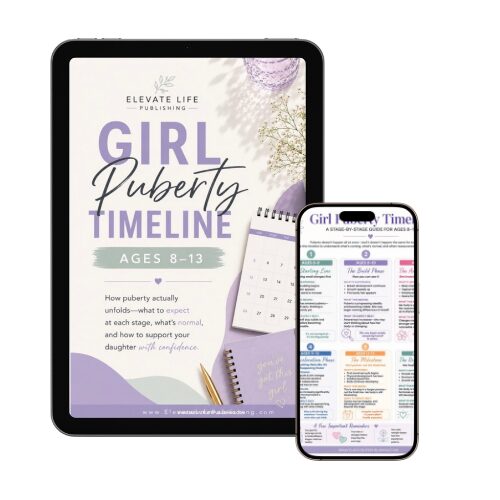
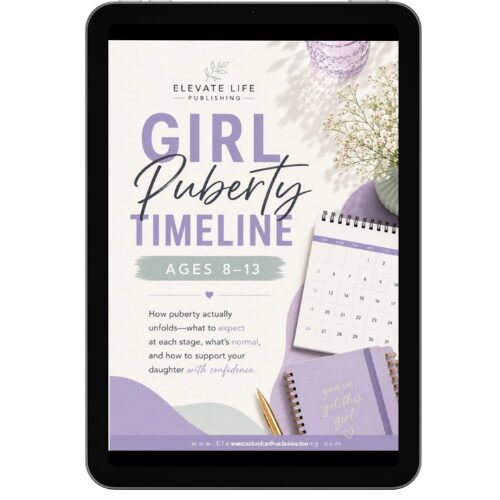
Get Our Free Printable: Girl Puberty Timeline Cheat Sheet
We’ve covered a lot of information so far. If you want a simple way to reference all of this without second-guessing yourself…
Download the Girl Puberty Timeline Cheat Sheet below.
It’s a easy-breezy, printable guide designed for moms who want to:
- feel prepared
- stop over-Googling
- and have something they can come back to anytime

When to Talk to a Doctor About Puberty
Check in with your pediatrician if:
- Puberty starts before age 8
- Changes happen very quickly
- There is pain or discomfort
- Your daughter feels anxious or distressed
Most of the time, you’ll get reassurance everything is on track, but it’s always okay to ask.
How Moms Can Use This Puberty Timeline (Without Overthinking It)
This timeline is NOT for:
✘ Comparing your daughter to others
✘ Predicting exact milestones
✘ Deciding something is wrong
It IS for:
✔ Knowing what’s coming
✔ Feeling prepared instead of surprised
✔ Staying calm and confident
✔ Supporting your daughter through each stage
Because at the end of the day:
👉 Your reaction shapes how she experiences puberty more than the timeline does
A Quick Note for Moms Who Want More Guidance
Most puberty resources fall into two extremes:
- Too basic (surface-level, cartoon-like or pamphlet style)
- Too much non-age appropriate information too soon
If you’ve ever felt like:
“I just want something practical, age-appropriate, and not overwhelming…”
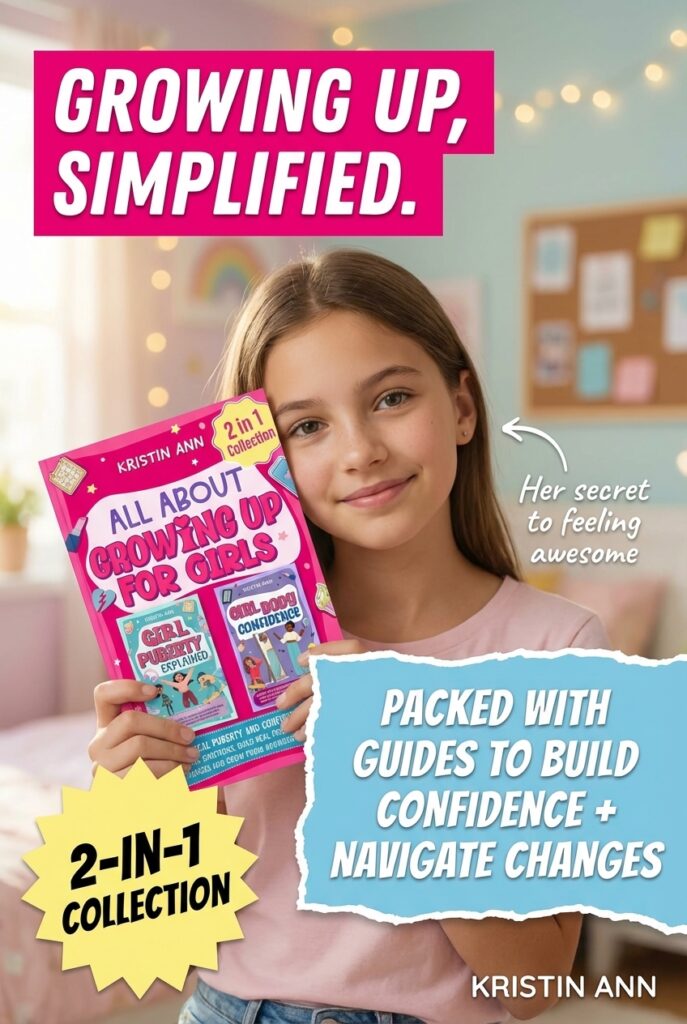
We are here for you and that is exactly why the book All About Growing Up for Girls was created. It is a more structured, with 2 books in one containing real-life guide for girls that walks them (and you ) through puberty in a way that actually makes sense to them, not just to adults.
It is packed full of real usable, up-to-date information your daughter (and you) need. You can read along together or let her read a chapter and ask you questions. If your daughter is reading chapter books, she can read this book. It’s our 2 best sellers together in one book. Both books combined have over 400 positive reviews on Amazon from moms like you! It’s the best value.

Frequently Asked Questions About Puberty in Girls (Ages 8–13)
Most girls start puberty between ages 8–13, but there’s a wide range of normal. Some girls show early signs like body odor or breast budding at age 8, while others don’t start until later. Both are completely healthy timelines.
Yes. Early signs of puberty-like breast buds, sweating, or body odor-can begin around age 8. This doesn’t mean puberty will move quickly, just that the process has started.
The earliest signs of puberty in girls often include:
- Breast budding
- Body odor
- Growth spurts
- Emotional sensitivity
These changes can appear gradually and don’t always happen in the same order.
Most girls get their first period between ages 9–14, usually about 1–2 years after breast development begins. It’s one of the most common milestones-but also one of the least predictable.
Common signs that a first period may be approaching include:
- Vaginal discharge
- Mild cramping or lower belly aches
- Mood changes
- Fatigue
These signs can show up months before a period actually starts.
Yes. Puberty timing varies widely. Some girls develop earlier, some later, and many fall somewhere in between. Differences in timing are one of the most normal parts of puberty.
During puberty, hormones affect emotional regulation before the brain fully catches up. This can lead to mood swings, big reactions, or sensitivity. It doesn’t mean something is wrong-it means her brain and body are developing at different speeds.
The most effective approach is:
- Keep conversations simple and natural
- Avoid big, overwhelming talks
- Stay calm and approachable
- Answer questions as they come up
Consistency matters more than saying everything perfectly.
Start before it happens. Keep it simple:
- Explain what a period is in basic terms
- Show her what pads look like
- Let her know what to expect
The goal is for her to feel prepared, not surprised.
Early development can sometimes make girls feel self-conscious. Reassure her that everyone grows at different rates and avoid drawing extra attention to the changes. Confidence often comes from how calmly and casually you handle it.
If you’re reading through all of this and thinking:
“Okay… I understand what’s happening, but I still want something that actually helps my daughter navigate it step-by-step…”
Welcome to the club.
Most resources either:
- oversimplify puberty
- or overwhelm girls with too much, too soon
That’s exactly why Girl Puberty Explained was created. It’s a more practical, age-appropriate guide designed specifically for girls so they can understand what’s happening in a way that actually makes sense to them, not just to us as moms.
👉 It walks them through the changes, the emotions, and the “what do I do now?” moments in a way that builds confidence instead of confusion. It’s a book full of helpful details to be prepared for each stage (hint: check page count of puberty books before you buy, some are pamphlet size).
Get All About Growing Up for Girls, 2 in 1 Collection. It’s our 2 best sellers with over 400 positive reviews combined on Amazon from moms like you.
And if you want something simple you can reference anytime…
Download the Girl Puberty Timeline Cheat Sheet below. Your calm, printable guide you can come back to whenever you need a quick reminder. No second-guessing required.
Other books and free resources you may like:
Girl Puberty Explained—The ultimate tween guide to build unshakeable confidence, embrace body changes, navigate new emotions, and spark empowering, positive talks at home about growing up!
Girl Body Confidence— Essential tools to grow up strong, build confidence, inspire easier conversations with loved ones, nurture a positive body image, empower resilience through puberty & beyond.
Can’t decide between the two? Get:
All About Growing Up for Girls 2 in 1 Collection which has both books in one! The BEST value. It contains practical puberty & confidence guides to manage emotions, build real friendships, love body changes & grow from awkward to awesome. A great value!
Free Signs of Puberty In Girls Checklist: It’s designed to help you recognize early signs, feel grounded instead of panicked and support your daughter with confidence.
Free First Talk Made Simple: A free 15-minute guide designed to help you get through that first conversation right (or at least as close as possible 🙂) .